Sharyl Attkisson – Mission Next
A little more than a week after the U.S. raid on Venezuela, a regional power shift is being felt.
The Trump administration is making sweeping oil deals with the interim president, Maduro’s former vice president.
And after Colombia’s president put in a conciliatory call to President Trump, he scored an invite to an upcoming meeting in Washington DC to address drug flow and other interests.
Political observers say it’s all part of Trump’s focus on addressing security threats in our own backyard.
Transcript:
It was just over a week ago that U.S. Special Operations forces made the dramatic raid on Venezuela’s capital to capture dictator Nicolas Maduro. He and his wife brought to the US for trial on a string of narco terrorism charges dating back to 2020.
In Venezuela, celebrations after Maduro’s forced exit. Eight million fled in recent years as the once-prosperous country suffered under two regimes economic collapse, soaring crime, and widespread starvation.
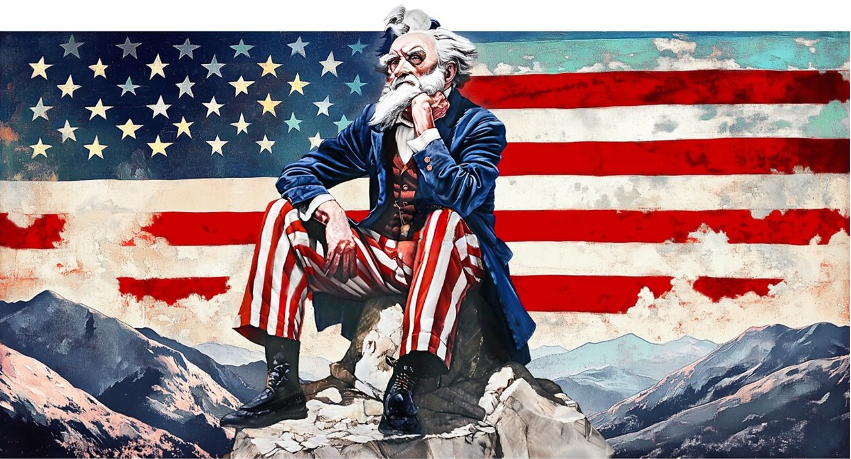
Observers liken Trump’s approach to the Monroe Doctrine in 1823. President James Monroe warned that ongoing European efforts to colonize or interfere in the Americas would be viewed as acts of aggression requiring a US response.
President Trump: The Monroe Doctrine is a big deal, but we’ve superseded it by a lot, by a real lot. They now call it the Don-roe Doctrine.
Today, it’s China, Russia, and Iran that have had growing influence in Venezuela, and the rest of Central and South America, through economic investments, military cooperation, and diplomatic alliances with leftist governments.
Alexander Gray was chief of staff at the National Security Council during President Trump’s first term.
Sharyl: What are your initial overview reactions to what we did in Venezuela?
Alexander Gray: I think it’s long overdue. This is something that the United States really should have done in terms of reasserting our interests in the hemisphere. The number one issue here is that for decades, Venezuela has been a puppet of the Chinese, the Russians, and the Iranians. And we allowed it to go on in our hemisphere, in our backyard. And now we finally have pushed back. We’ve done something that, not only was it legally justified, but it’s something that from a geostrategic standpoint was essential and overdue.
Uncertainty in Venezuela has created worries there could be chaos caused by throngs of people leaving or returning. Full Measure cameras were there in recent days as more Venezuelans crossed into neighboring Colombia.
We got reaction from citizens In Colombia where millions of Venezuelans fled to in recent years.
Woman: My opinion about Trump’s stance regarding the country of Venezuela is entirely positive for Venezuelans.
Man: The vast majority of Venezuelans in Colombia have always said that if Maduro were to leave, everything in Venezuela could improve 100%.
In the immediate aftermath of Maduro’s capture, Trump followed with warnings for other US adversaries, including Colombia.
President Trump: Colombia is very sick too — run by a sick man who likes making cocaine and selling it to the United States, and he’s not going to be doing it very long.
Sharyl: What do you think that means for Columbia for President Trump to have raised that?
Alexander Gray: Well, he obviously has a very hostile relationship with Gustavo Petro, who is a radical left wing former communist guerrilla who’s the president of Columbia. I think we’ve already seen that relationship stabilize a little bit. Gustavo Petro is coming to the United States, he’s going to meet President Trump at the White House. The difference between that regime and regimes like Nicaragua, Cuba, the former Maduro regime, is Columbia is still a constitutional democracy. And there’s a very good chance that they’re going to throw Petro out the next chance they get. And we’ll have a regime that we can deal with that’s rational, that’s reasonable.
President Trump also put Venezuela ally, communist Cuba on notice. US troops killed 32 Cuban security forces stationed in Venezuela in the operation to capture Maduro.
President Trump: Cuba will always survive because of Venezuela, now they won’t have that money coming in, they won’t have that income coming in. You know, a lot of Cubans were killed yesterday, you know that.
Carrie Filipetti was a Venezuela specialist under the first Trump administration.
Sharyl: Venezuela, of course, has been a major supporter of Cuba, which is no friend of the United States, at least in political terms. And President Trump mentioned Cuba after the Venezuela invasion. What do you make of that?
Carrie Filipetti: I think the mention of Cuba is more to do with the natural decline of the Cuban regime now that it no longer has a lead patron. So, if we look at the entire history of the Cuban regime, it has always relied on some kind of external actor, whether it was the USSR, when that fell, it became Venezuela and now the question is who is going to be their next patron? So I think the regime should be thinking about its survival, not so much that the US is going to do an operation like what they did against Maduro, but more that their system and their repression apparatus cannot survive without having a patron which they no longer have.
Full Measure has reported from Cuba on national security and political issues. While there we discovered the return of Trump, with a new Secretary of State, put the Cuban government on guard.
Sharyl: With Marco Rubio named a secretary of State. What do you think that does to the prospects of better relationship of any kind between us and Cuba in the next four years?
Carlos Fernández de Cossío: He’s a known enemy of Cuba. He’s, he’s, he’s never set foot on Cuba. He wasn’t born in Cuba. He’s being vocal in wanting to overthrow the Cuban government, to change Cuba in a way that is liking to him or to the people that surround him, or perhaps to the U.S. government not in accordance with this desire of the people of Cuba.
Sharyl (on camera): Late last week Venezuela’s regime released five political prisoners and was expected to free many more, prompting President Trump to say he was canceling a “second wave of attacks” on the country.