The Donna Reed Show
Nostalgia Time.
“The Donna Reed Show” premiered on ABC in 1958 and ran until 1966, covering eight successful seasons. It centered around the Stone family in the fictional town of Hilldale, capturing everyday suburban life through the lens of doctor Alex Stone, his wife Donna, and their two children, Mary and Jeff.
I watched it as a kid through my high school years on our family’s black-and-white TV. As a side note, the mother of a very good high school friend of mine during that time, John Huff, was the spitting image of Donna Reed. I had to watch myself so I wouldn’t stare at her when I was at their house because she was so beautiful.
After I got married in 1963, my wife and I watched it religiously through its final season.
Reruns were widespread throughout the late 1960s and 1970s, but eventually faded from most markets by the early 1980s. Consequently, our children were also able to watch this wholesome family content during their formative years.
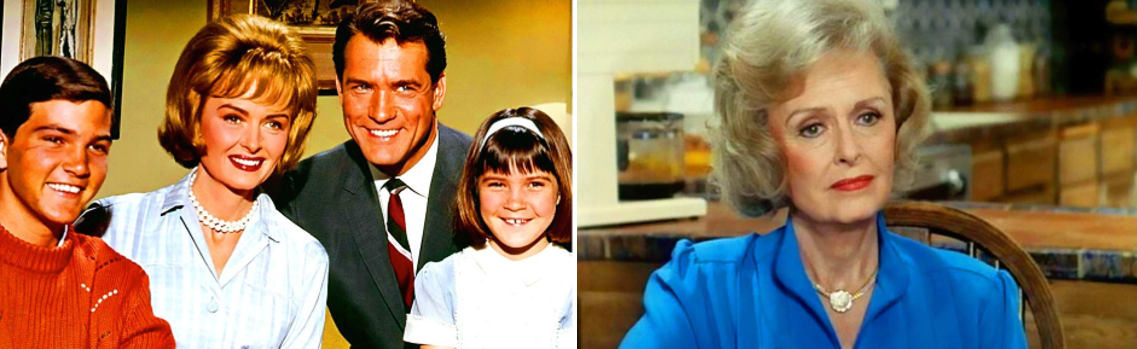
In later years, when Donna Reed spoke about her time on “The Donna Reed Show,” she often emphasized how deeply she connected with the character of Donna Stone.
In interviews, Reed explained that she wanted the role to reflect a capable, intelligent woman who balanced family life with warmth and wit, rather than the typical sitcom mother who was either clueless or overly perfect. She personally worked with the writers to make sure the show portrayed a realistic American family, and her passion shaped it into something both entertaining and groundbreaking.
The series stood out because it gave equal importance to the mother’s role, portraying Donna as a smart, active woman who could solve problems both inside and outside her home.
Donna Reed was already a celebrated actress when she transitioned to television. Having won an Academy Award for her role in “From Here to Eternity,” many were surprised she chose to star in a family sitcom. Reed later revealed that she wanted to reach a broader audience, particularly young people and mothers, and television offered that platform. She became one of the first actresses to head her own TV series while also holding production control, something almost unheard of for women in Hollywood at the time.
Carl Betz played her husband, Dr. Alex Stone, with a calm authority that balanced Donna’s vibrancy.
Shelley Fabares portrayed Mary Stone, the teenage daughter whose coming-of-age struggles were central to the story.
Paul Petersen played Jeff Stone, the mischievous but lovable son.
Both Fabares and Petersen became teen idols during the show’s run, with Fabares even launching a pop music career. Her single “Johnny Angel,” which she performed during the show, topped the Billboard charts in 1962.
The writers made a conscious decision to evolve the characters over time, particularly Mary and Jeff, to reflect real-life growing pains rather than keeping them frozen in perpetual childhood. This decision added a layer of realism that resonated with audiences. Episodes often tackled serious topics such as peer pressure, job loss, illness, and personal dreams, offering solutions that felt both idealistic and achievable.
Behind the scenes, the on-set environment was famously professional and relaxed. Reed treated her castmates with maternal care, often bringing homemade meals and taking an interest in their off-screen lives. Paul Petersen later credited Reed as a steady influence during his difficult teenage years, noting that she offered guidance and support beyond her on-camera role.
Another interesting detail was how “The Donna Reed Show” influenced public perceptions of family dynamics. In the early 1960s, fan mail poured in praising Donna Stone’s character as an aspirational figure. Mothers admired her grace under pressure, teenagers related to Mary and Jeff’s realistic struggles, and even fathers appreciated the show’s balanced, respectful portrayal of family leadership.
The show’s success also opened the door to discussions about more nuanced female roles on television. Although it maintained a wholesome, clean-cut image, it subtly challenged traditional expectations by showing Donna Stone involved in community activities, managing finances, and having a voice equal to her husband’s in family decisions.
Reed’s commitment to authenticity extended even to the show’s sponsors. When advertisers wanted Donna Stone to endorse cigarettes or alcohol, Reed refused, insisting that the character must remain a positive role model. It was a bold stand at a time when sponsorship dollars dictated much of television content.
“The Donna Reed Show” remained a beloved part of American television even after its original run ended. Its reruns introduced new generations to its blend of humor, warmth, and gentle lessons about family, community, and personal responsibility.
= = = = = = = = = = = = = = = = = = = = = =
Where The Donna Reed Show Is Now Streaming
- Amazon Freevee / Prime Video – Has offered several seasons intermittently since 2023 under Sony Pictures Television’s classic sitcom catalog. This has historically been the most stable streaming option for the show.
- Tubi TV – Carries a rotating set of classic sitcoms under the “TV Classics” section, and The Donna Reed Show was available there episodically throughout 2024 and much of 2025.
- Pluto TV – Frequently features it on the Classic TV Families channel and occasionally in on-demand form.
- The Roku Channel – Occasionally includes individual seasons (typically Seasons 1–3) licensed through MPI Home Video.
- Classic Reel Network / Plex TV – These smaller ad-supported platforms have hosted the show at various times, especially under Sony’s extended back-catalog contracts.